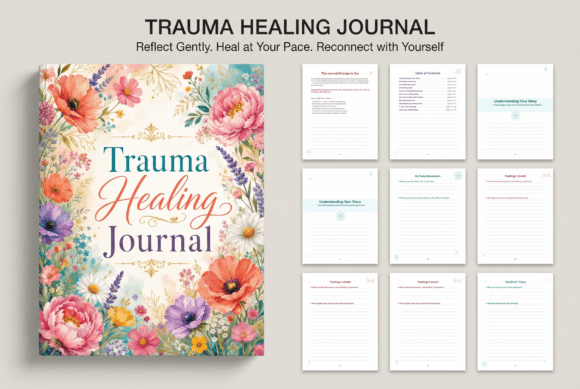
Trauma Healing Journal: A Compassionate Path to Recovery and Peace
Trauma can leave lasting imprints on our minds, bodies, and spirits. Whether it stems from childhood experiences, unexpected life events, or ongoing stressors, unresolved trauma often resurfaces in ways that disrupt our sense of safety, self-worth, and connection. The Trauma Healing Journal offers a structured yet gentle approach to exploring and healing from these wounds. Designed for individuals navigating the complex journey of recovery, this 120-page journal provides guided prompts, reflective exercises, and compassionate support to help you reclaim your emotional well-being.
This journal is more than just a notebook—it’s a private sanctuary where you can explore your story without judgment. It is suitable for those working with a therapist or seeking healing independently. The foundation of this resource is built on the understanding that healing is not linear and that every step forward, no matter how small, is an act of courage.
What Is the Trauma Healing Journal?
The Trauma Healing Journal is a comprehensive tool designed to guide individuals through the process of identifying, understanding, and healing from trauma. It combines elements of cognitive-behavioral techniques, somatic awareness, and mindfulness-based practices into a cohesive framework that supports emotional exploration and growth. Each section of the journal is crafted to help users move through stages of healing at their own pace, ensuring that the process remains personal and meaningful.
Unlike generic journals, this one is specifically tailored to address the unique needs of trauma survivors. It includes guided prompts, worksheets, and reflection spaces that encourage deep introspection and self-compassion. Whether you are new to the healing journey or have been on it for years, this journal can serve as a valuable companion along the way.
Challenges and Goals in Trauma Healing
Trauma healing is a deeply personal journey, and individuals may face a variety of challenges along the way. Common obstacles include difficulty identifying emotions, feeling overwhelmed by past experiences, or struggling with self-compassion. Additionally, many people find it hard to distinguish between past trauma and present-day stress, which can lead to chronic anxiety or emotional dysregulation.
For some, the goal may be to understand the root causes of certain behaviors or patterns. Others may seek relief from symptoms such as insomnia, irritability, or emotional numbness. Still, others may aim to rebuild trust in themselves or others after experiencing betrayal or neglect. Whatever your specific goals, the Trauma Healing Journal can help you take actionable steps toward healing.
How the Trauma Healing Journal Can Help
The Trauma Healing Journal is structured around three core sections that guide users through different aspects of the healing process:
- Understanding Your Story: This section helps you identify early memories and experiences that shaped your worldview. Through guided prompts, you’ll create a timeline of major life events and reflect on the emotional weight you’ve carried over time. You’ll also explore how your body holds tension and what behaviors may be rooted in unprocessed trauma.
- Identifying Emotions: Emotions can be difficult to name, especially when they are tied to traumatic experiences. This section uses tools like the Emotion Wheel to help you recognize and label both primary and secondary feelings. You’ll also learn to distinguish between fear based on past experiences and anxiety about the future, while exploring emotions that were once suppressed or hidden.
- Recognizing Triggers: Understanding triggers is essential for managing emotional responses and preventing re-traumatization. This section guides you through creating a Trigger Map, helping you identify specific situations, people, or environments that evoke strong emotional reactions. By recognizing these patterns, you can begin to develop healthier coping strategies.
Each of these sections is designed to help you move through the healing process with intention and care. The journal encourages self-compassion throughout, reminding you that healing is not about erasing the past but learning to live with it in a way that promotes peace and resilience.
Practical Applications and Outcomes
The Trauma Healing Journal can be used in various ways depending on your needs and preferences. Some individuals may choose to work through the journal independently, using it as a daily reflection tool. Others may integrate it into therapy sessions, using the prompts as a basis for deeper conversations with their therapist. Regardless of your approach, the journal offers flexibility and adaptability to suit your unique healing path.
Over time, regular use of the journal can lead to several positive outcomes. These may include increased emotional awareness, improved self-compassion, reduced symptoms of anxiety or depression, and a greater sense of empowerment. Users often report feeling more connected to their inner selves and better equipped to handle life’s challenges with resilience and grace.
Who Can Benefit from the Trauma Healing Journal?
The Trauma Healing Journal is suitable for a wide range of individuals, including:
- Those who have experienced childhood trauma, abuse, or neglect
- Individuals dealing with PTSD, anxiety, or depression
- People navigating grief, loss, or major life transitions
- Anyone interested in self-discovery, emotional healing, or personal growth
Whether you are new to the healing process or have been on this journey for years, the journal can provide fresh insights and practical tools to support your progress. Its non-judgmental tone and structured approach make it accessible to people at any stage of their healing.
Considerations for Using the Trauma Healing Journal
While the Trauma Healing Journal is designed to be user-friendly, there are a few considerations to keep in mind. First, healing from trauma can be emotionally intense, so it’s important to proceed at a pace that feels safe and manageable for you. If you experience distress while working through the journal, consider reaching out to a mental health professional for support.
Additionally, it’s helpful to set aside dedicated time and space for journaling. Creating a consistent routine can enhance the effectiveness of the practice and help you stay committed to the process. Finally, remember that healing is not about perfection—it’s about showing up for yourself, again and again, with kindness and patience.
The Trauma Healing Journal is more than just a tool; it’s a testament to your strength and resilience. With its compassionate guidance and structured approach, it offers a pathway to recovery, peace, and emotional freedom—one page at a time.